2026/03 Etro – FLUX SS26
Details:
Etro
FLUX
Spring-Summer 2026
Via Monte Napoleone 5, Milan
Review:
by Peter Hamer
march 21, 2026
Etro SS26 Window Display Review: When Concept Overrides Retail
This Etro SS26 display review looks at the inspiration behind the concept, its execution in-store, and what it reveals about the current relationship between creativity and retail in luxury.
The SS26 show of Etro began with a live performance. As the house lights dimmed, La Niña, the Neapolitan singer and performer, took to the bandstand, driving the room with percussive rhythms and a modified microphone that transformed her voice into an electronic, almost ritualistic sound. This wasn’t entertainment layered onto the show. La Niña was positioned as a central reference point for Marco De Vincenzo’s latest collection, developed under the concept of FLUX.
I’ve linked the show below for context. Without it, the connection in-store becomes less evident.
Now, whether that inspiration translates into retail is another matter. A fashion show remains a show: built for press, VICs, and calendar relevance. Expecting it to function as a direct retail tool in 2026 is a misunderstanding of its role. But that’s a different discussion.
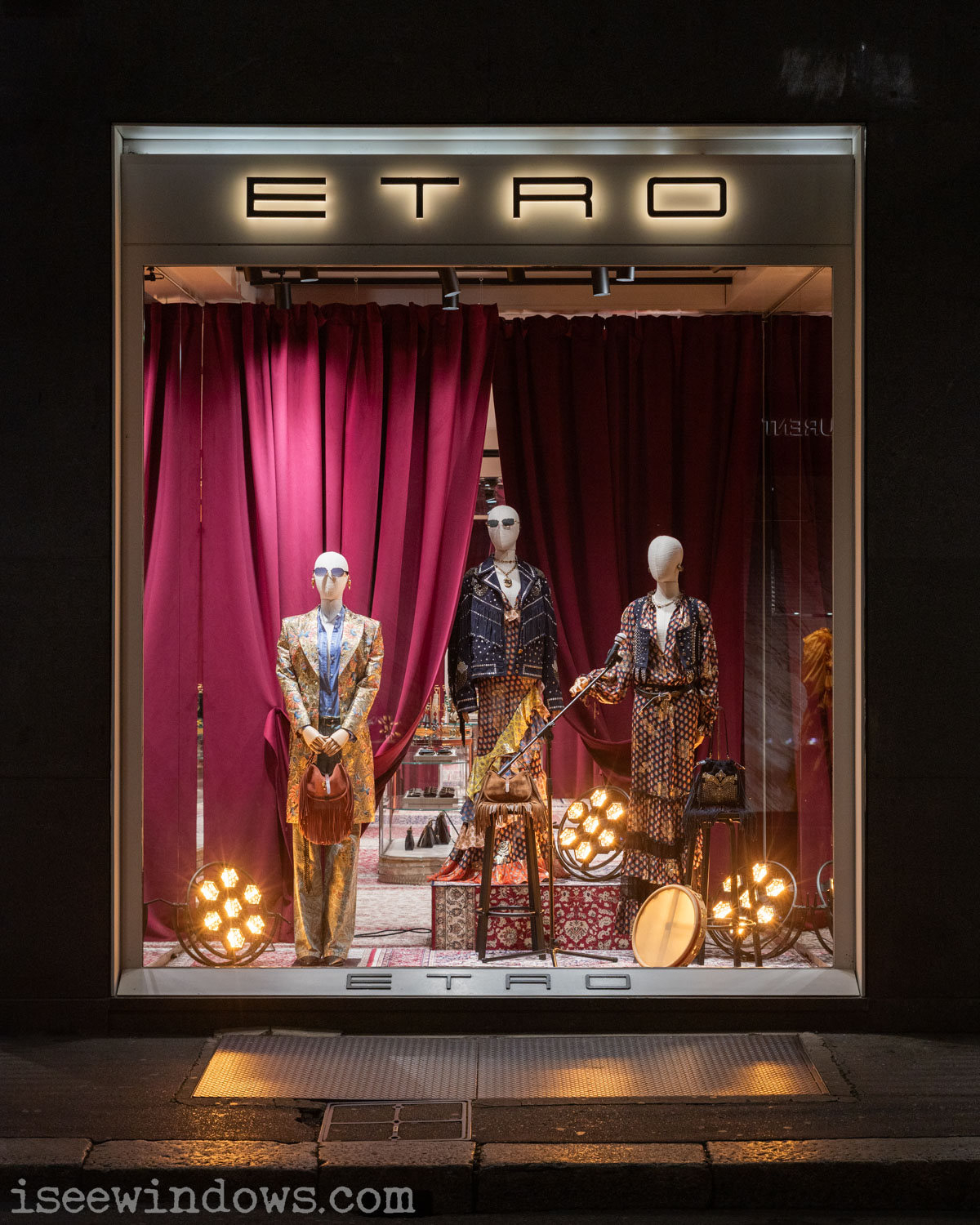
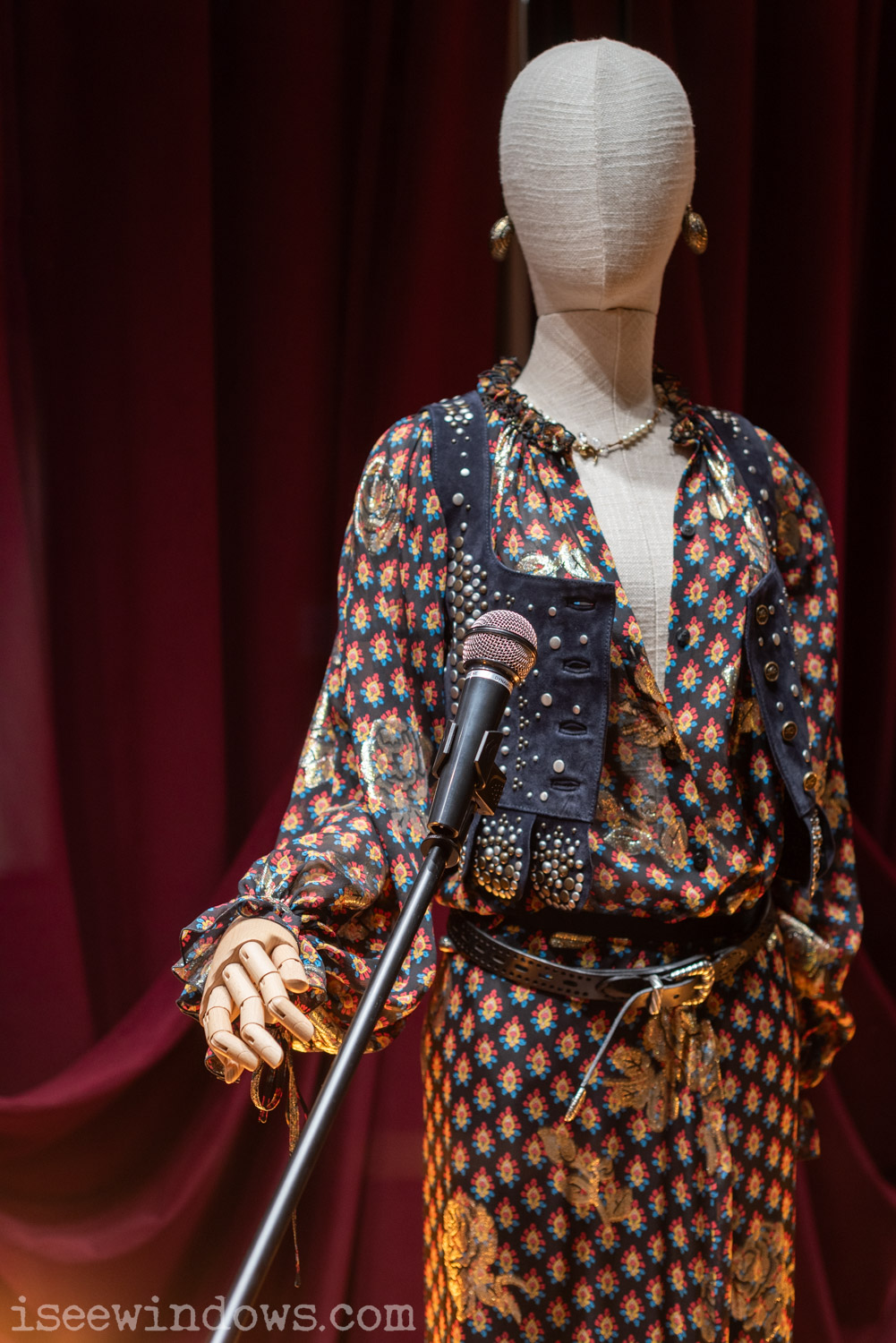
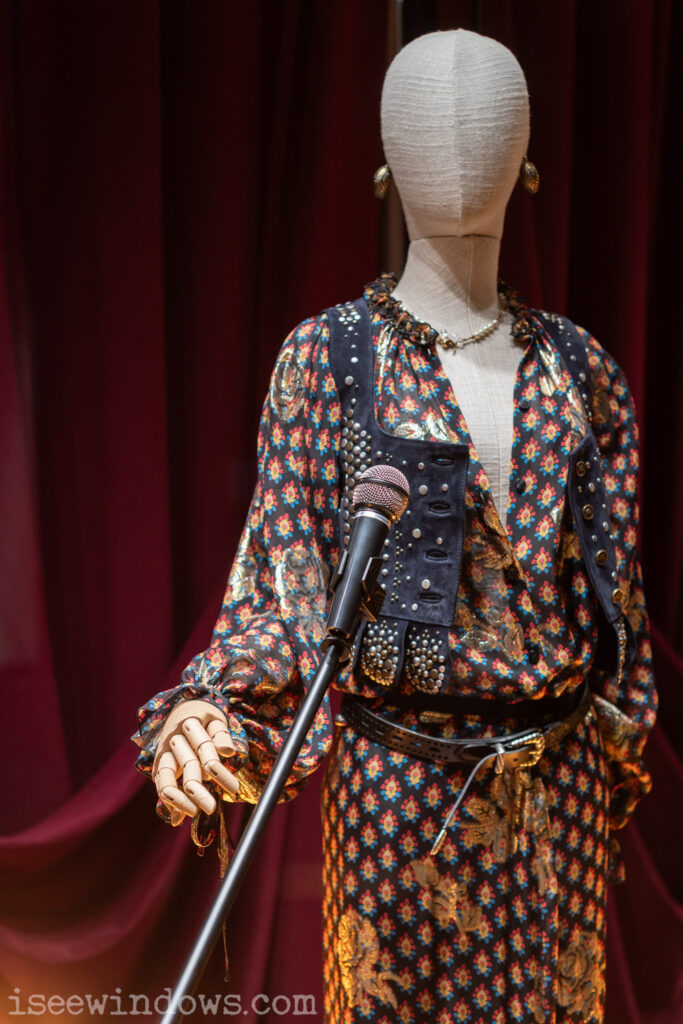
The window concept attempts to translate this into a literal concert scene. A group of mannequins is staged as if attending, or performing at, a live show. One stands at a microphone. The others exist around it.
And this is where the tension begins.
The mannequins lack a clearly readable role. Are they backup singers, dancers, or audience members? The ambiguity is open rather than directed. Their body language does not support a hierarchy or narrative, resulting in a scene that feels static rather than performative.
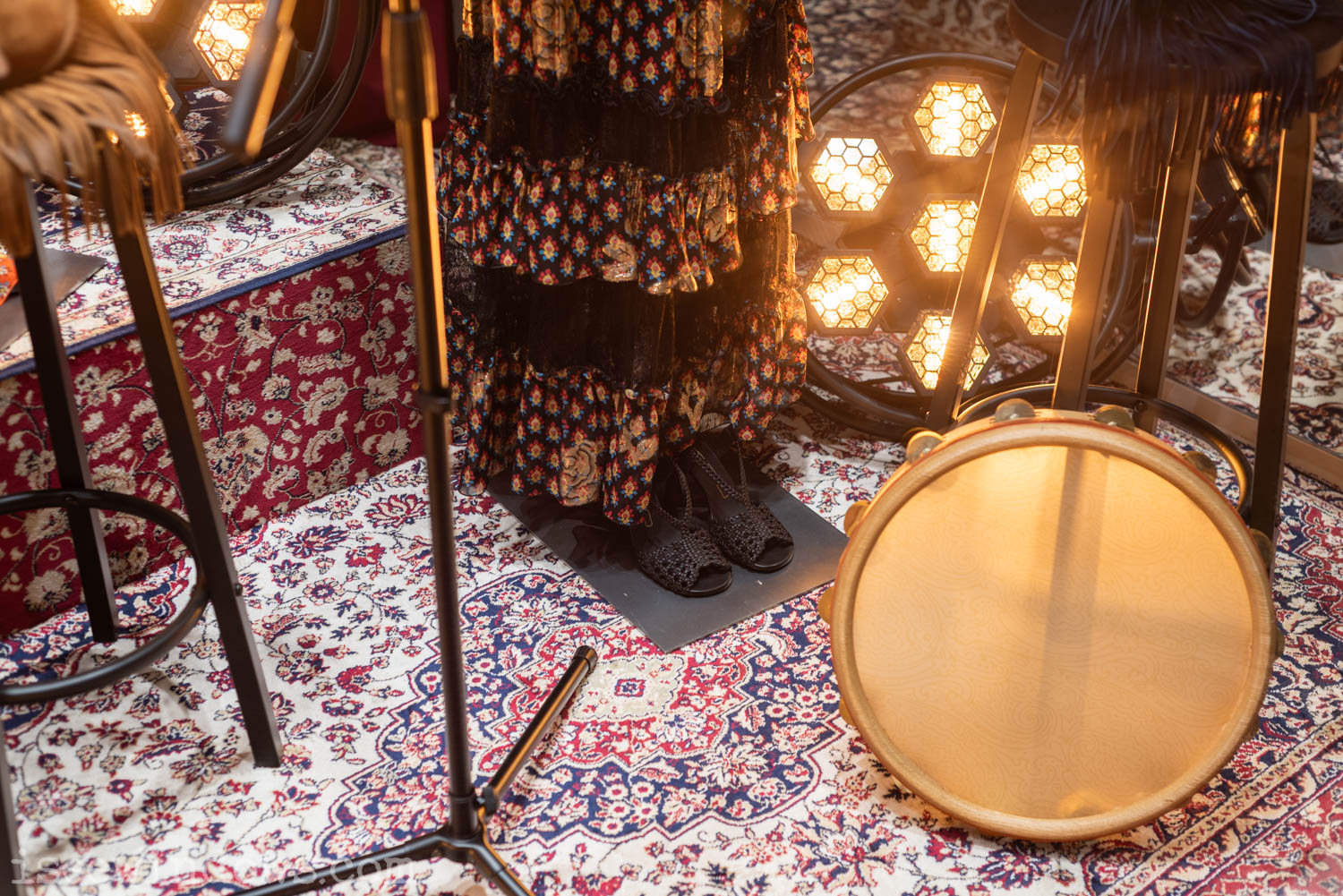
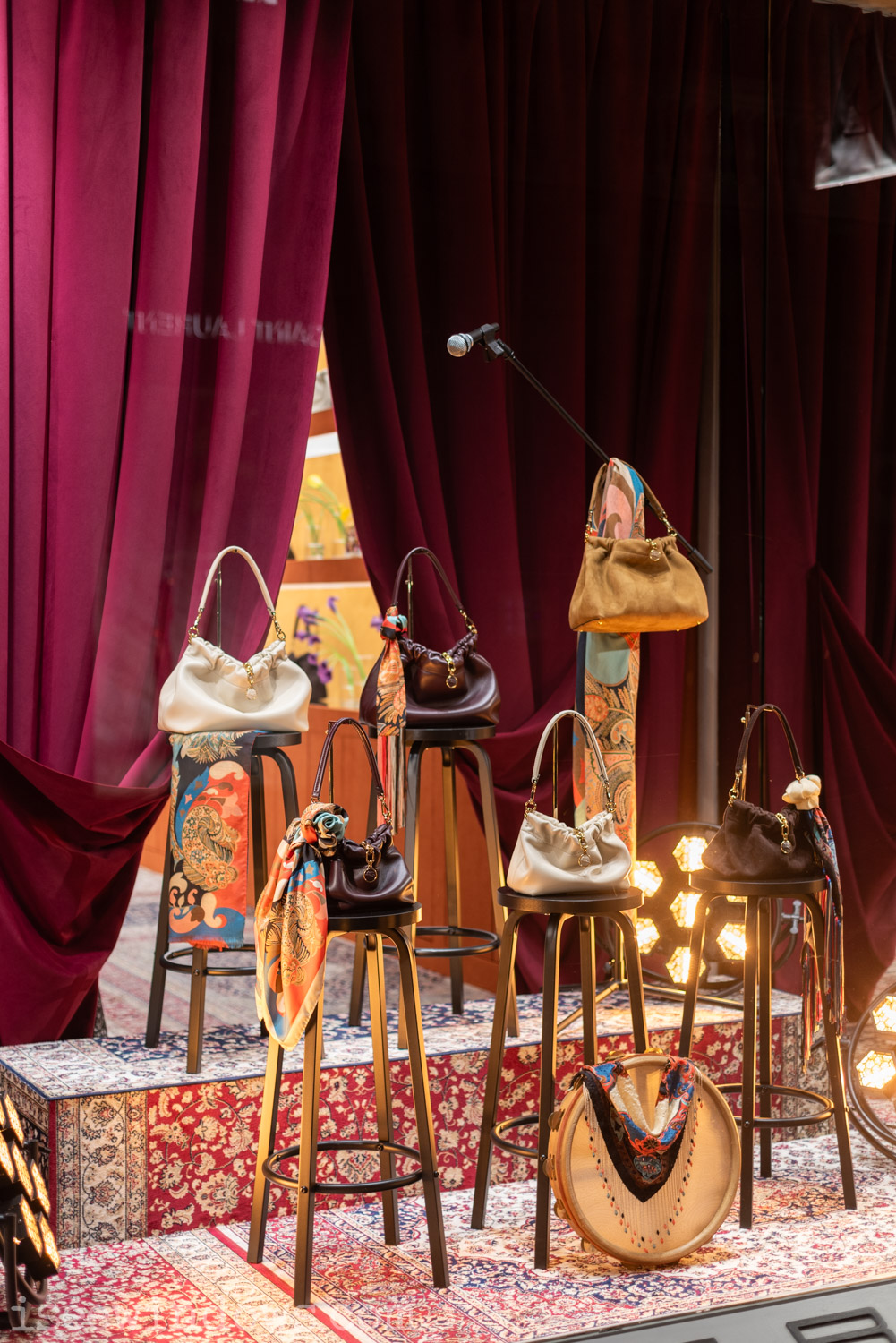
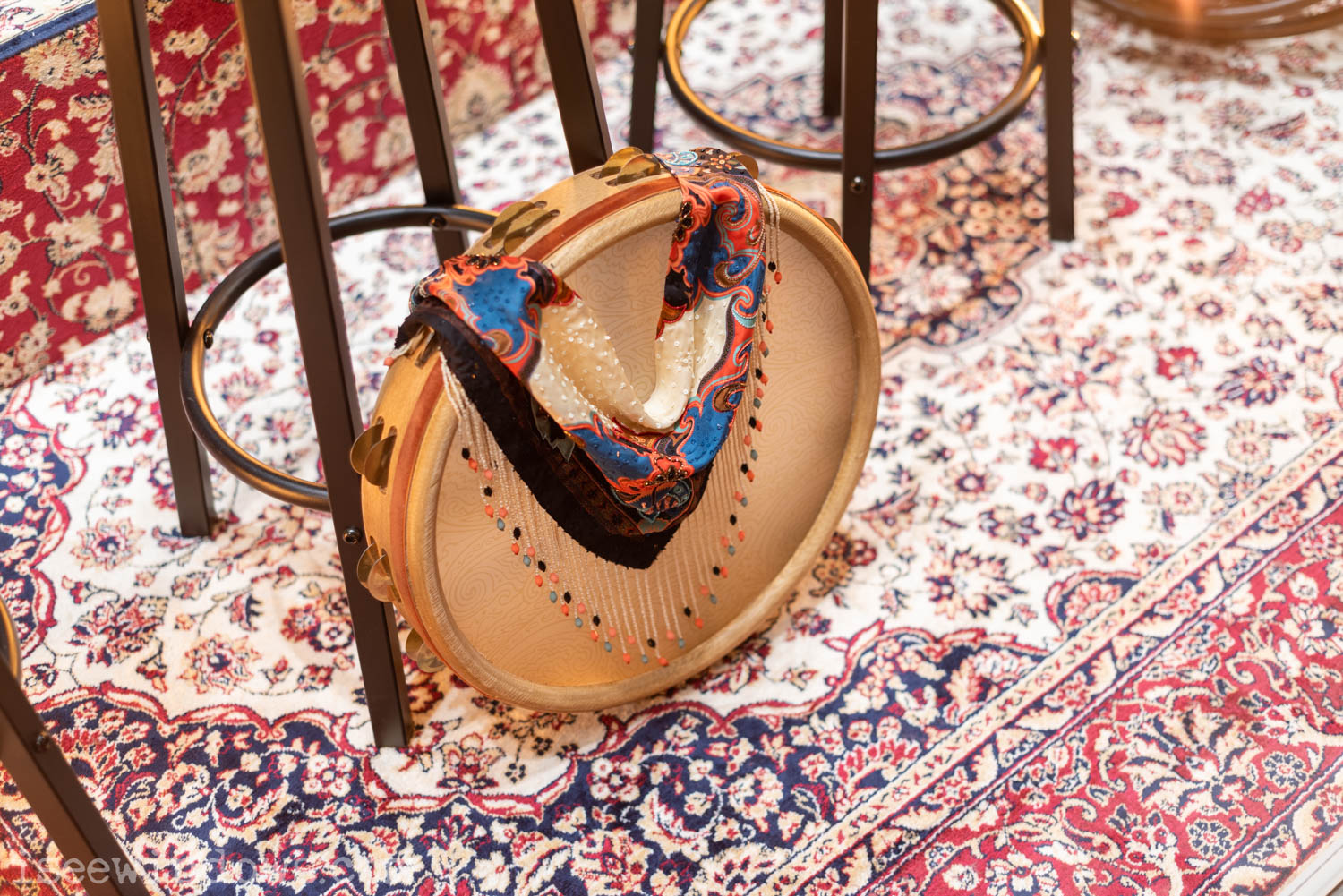
The props attempt to anchor the concept. Pandoras are covered in paisley branding, also featured in the show, a predictable but coherent reference. However, repetition alone does not construct meaning. It confirms application, but does not necessarily guide interpretation.
And then, there is the lighting.
Three spotlights hit the display from multiple angles, sideways and frontally, creating glare rather than focus. The result makes the window difficult to engage with. More attention after installation could help evaluate how the display is experienced from the customer’s point of view.
From a retail standpoint, this Etro SS26 display review highlights a loss of control over how the message is perceived at street level.
But the core issue sits elsewhere.
This is a highly produced window. The investment is evident: props, staging, lighting. Yet the concept relies heavily on prior knowledge of the show. Without that context, the narrative opens up to multiple interpretations, not all of which align with the brand’s positioning.
This creates a form of dissociation.
On one hand, there is a clear creative intention rooted in FLUX. On the other, the in-store expression depends on a moment, the show. to be fully understood. When that moment is absent, the concept becomes less precise, and the risk is that the display communicates atmosphere rather than meaning.
This is where the learning sits.
Relying on this type of creativity can create distance from luxury positioning, especially as the broader direction of the industry is moving toward clarity, reduction, and control. At the same time, it can also signal an opportunity: a willingness to explore new forms of expression.
The question is not whether this approach is right or wrong, but how it is translated.
Because retail should not depend on external context to function. It needs to stand independently, while still connecting back to the system it belongs to.
All of this brings us back to retail’s primary function: selling. The meaning of the transaction may have evolved, but its necessity has not. Without it, the store becomes a temporary installation, soon to be remembered rather than visited.
Ultimately, this Etro SS26 display review is not about a single window, but about how creative intent is translated into retail.
Finally, there is the broader context.
With De Vincenzo now out, and no clearly communicated successor, this moment raises a strategic question: what is the direction?
If the brand continues to rely on translating runway moments directly into retail, what happens when those moments are no longer clearly defined?
This is where cracks become visible.
And this is exactly that moment, when the need for structure becomes impossible to ignore.