
2026/03 Chanel – SS26
Details:
Chanel
Spring-Summer 2026
Via Monte Napoleone 7, Milan
Review:
by Peter Hamer
month 23, 2026
Chanel SS26: When Creativity Holds Without Explanation
Ay ay ay ay ay.
And then, suddenly, a concept arrives that does not need to justify itself. It simply works.
With Chanel SS26, the first collection by Matthieu Blazy now reaches the store. The buzz around it is already visible: queues forming outside, shoes disappearing almost immediately, a renewed obsession with the 25 bag, and accessories persuasive enough to make financial priorities feel temporarily negotiable.
But the real shift happens in the window.
When the Concept Stops Explaining Itself
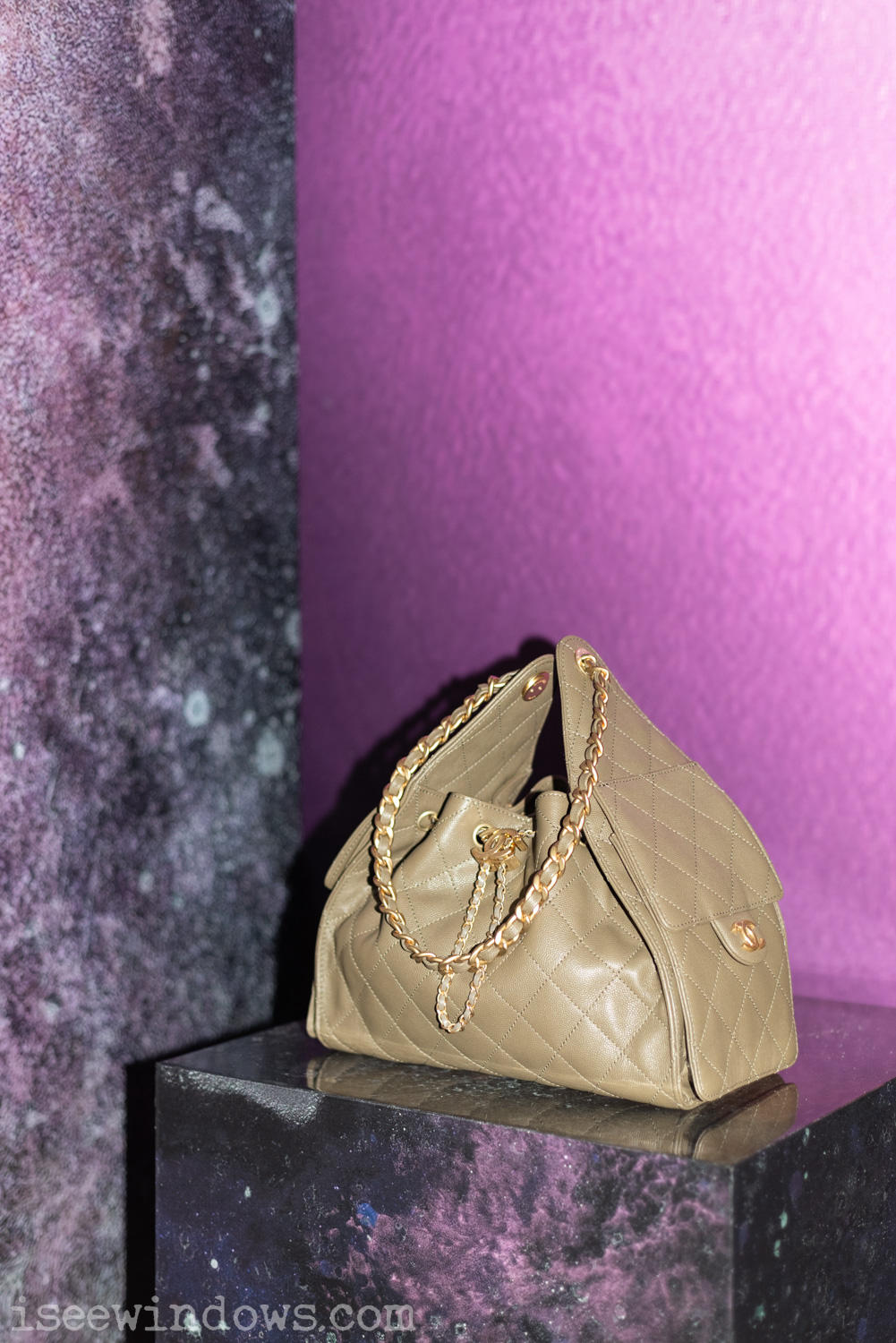
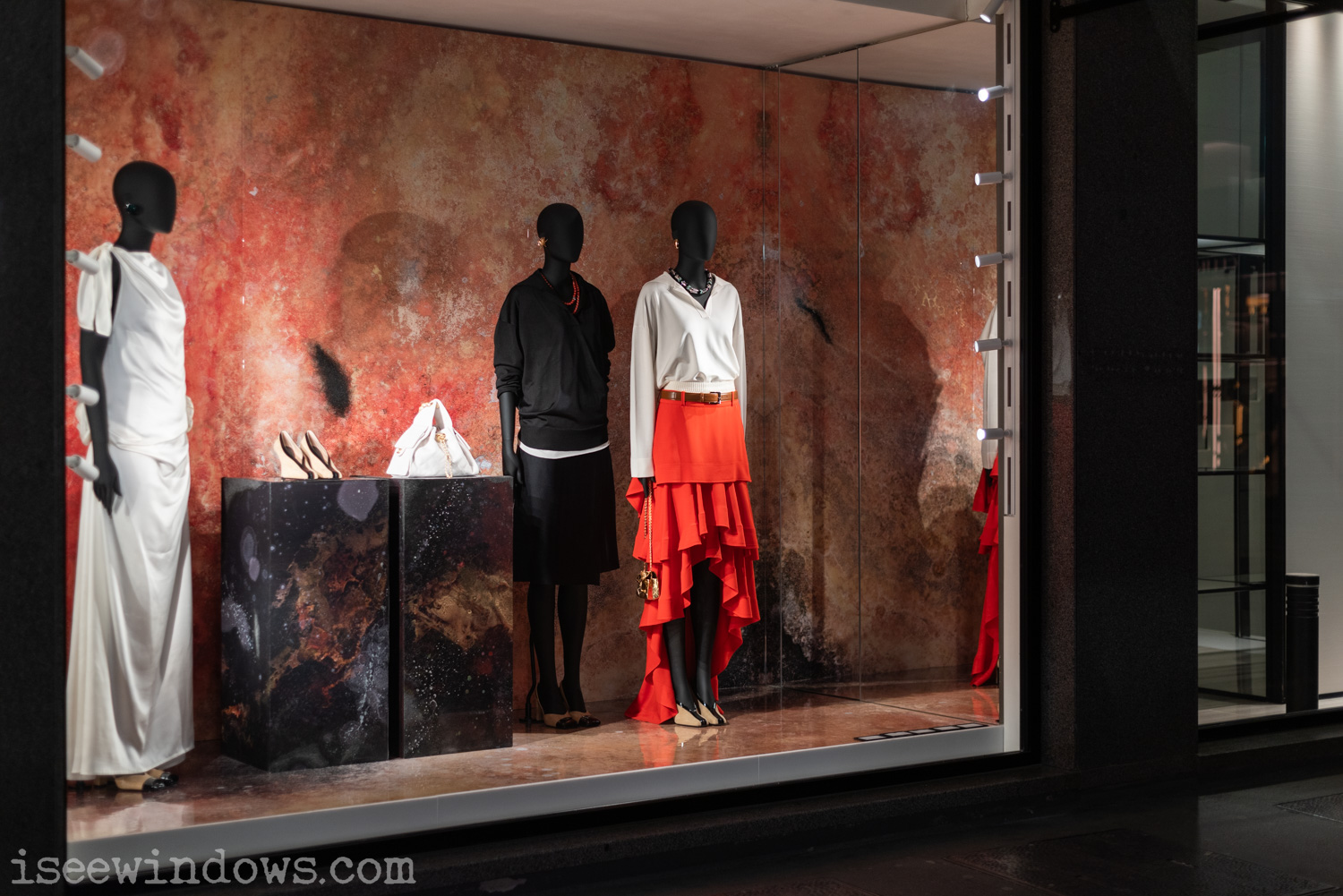
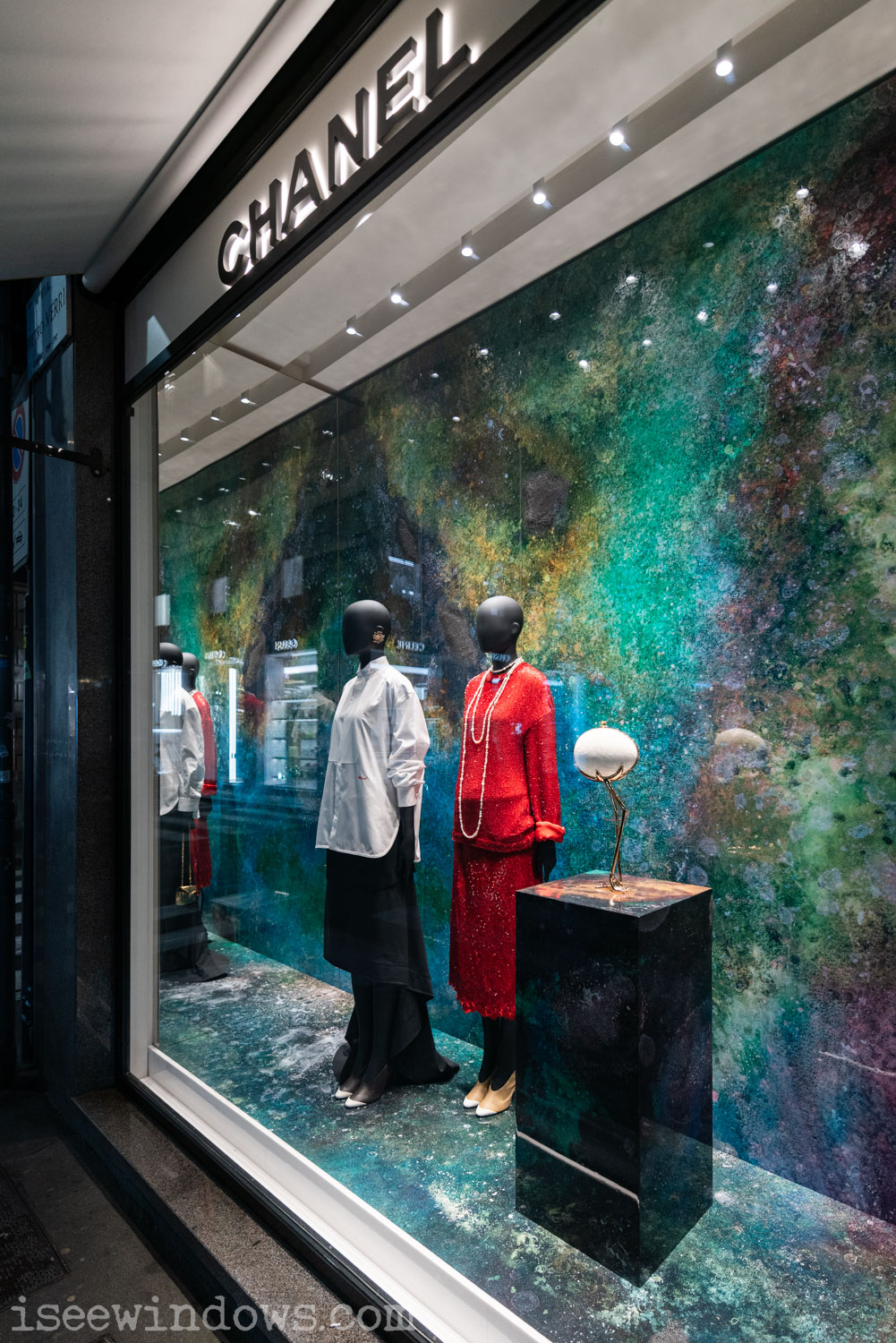
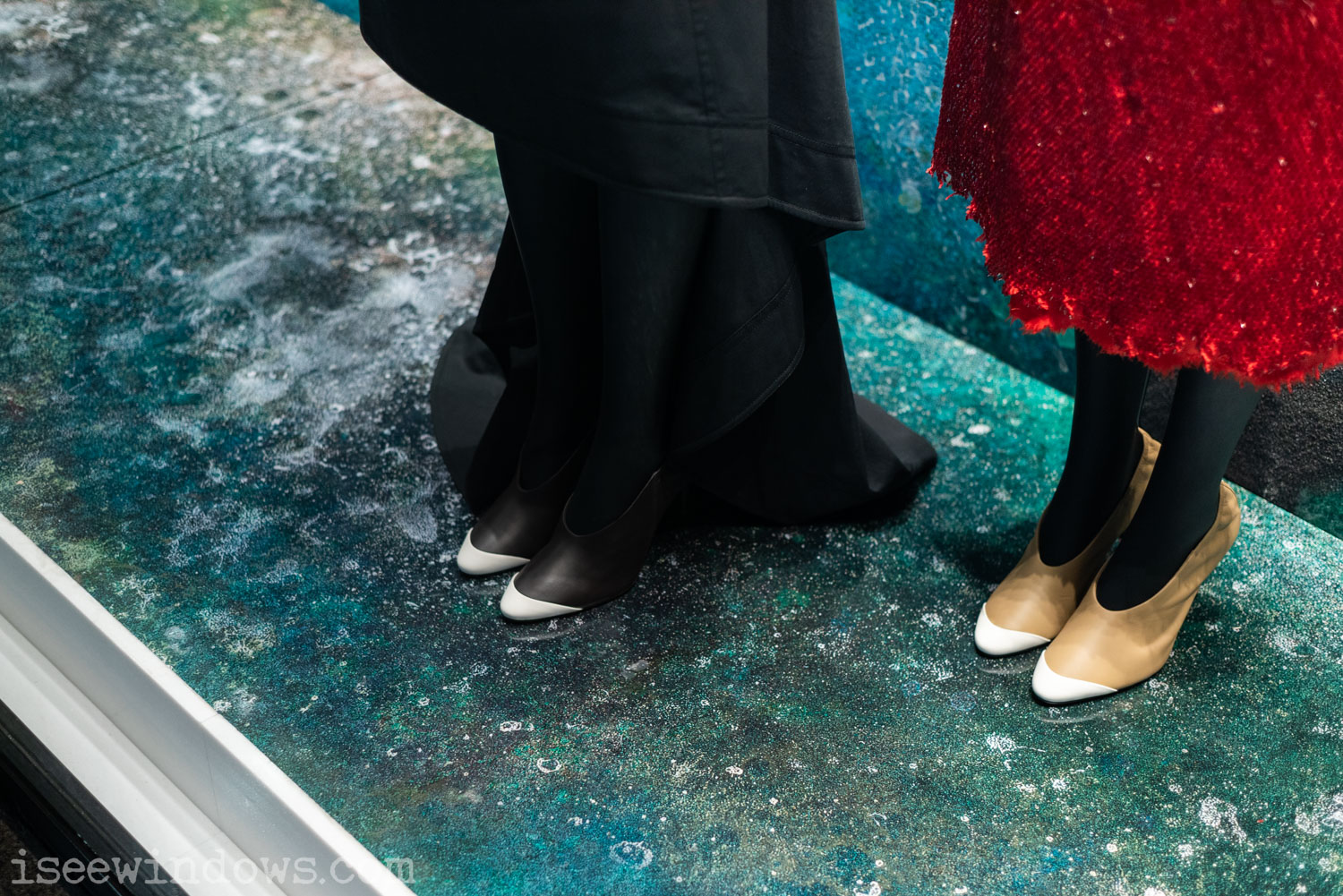
The display originates from the planetary scenography of Blazy’s debut show. Those suspended celestial forms are translated into enlarged textures, extending across floors, walls, side panels, and plinths. But something shifts in that translation.
The reference is no longer recognizable as a reference. Unlike the recent Etro FLUX display, where the concept depended on prior knowledge to function, Chanel’s execution removes that dependency entirely.
There is no need to have seen the show. No requirement to understand its origin. The display does not point back; it holds. This is where the concept becomes precise. Because what we are looking at is, technically, a creative concept, but one reduced to such an extent that it no longer behaves like one.
Taxonomy of Displays
Classification: ∅
This is an empty set display.
- No explicit brand assets
- No readable communication layer
- No product storytelling beyond presence
- No spatial intervention that reframes the store
- No external trigger or event
The origin exists, but it is absorbed. What remains is pure surface, texture, atmosphere. And normally, this is where things collapse.
Why This Does Not Collapse
An empty set display is, by definition, unstable. Without structural anchors, meaning tends to drift. The viewer is left searching for intention, often filling gaps with their own interpretation. That does not happen here. Because everything around the concept remains controlled:
- The mannequins are unchanged
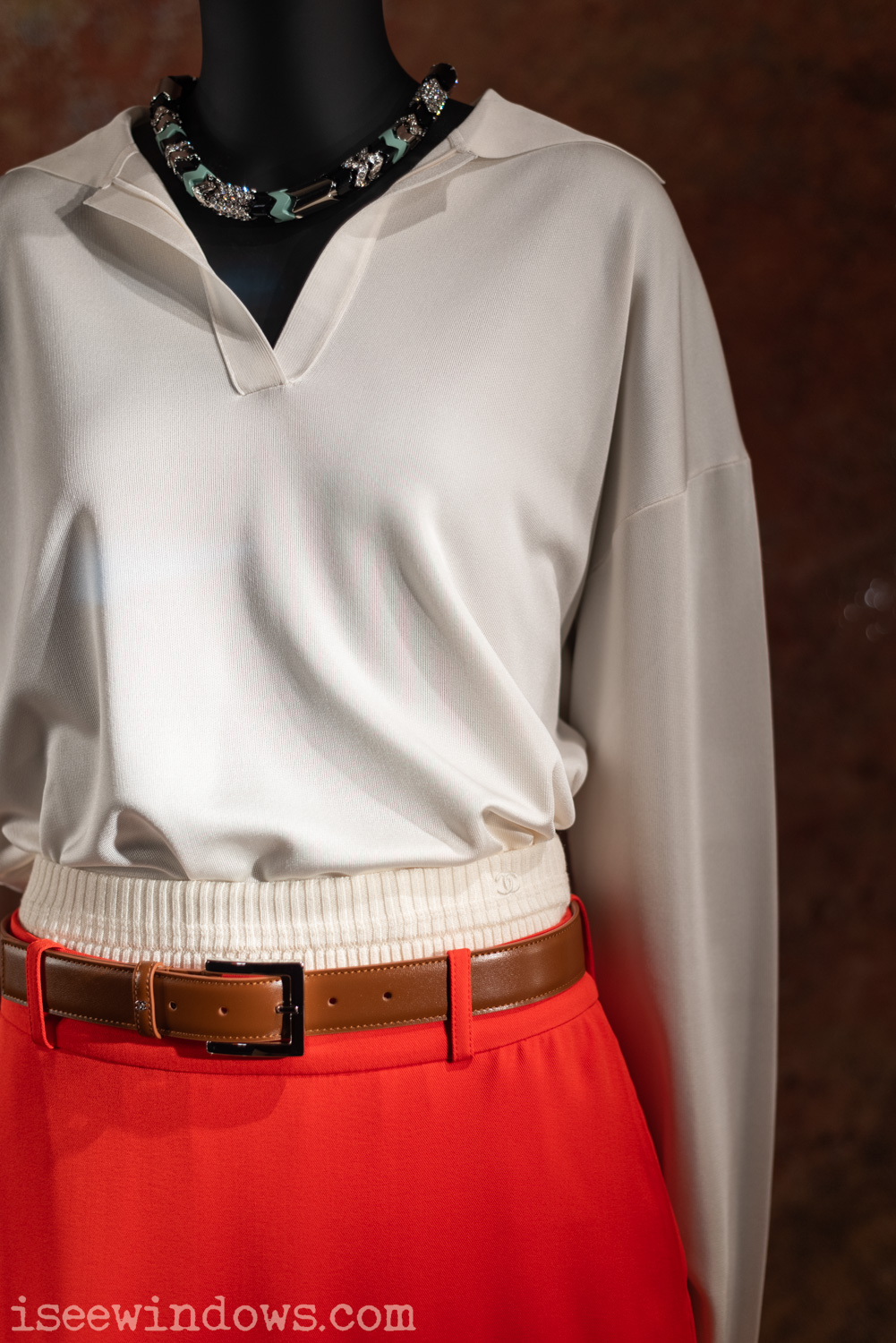
- The product is immediately legible
- The Chanel woman is intact, recognizable, stable
- The merchandising remains clear and intentional
The system holds. The concept does not need to explain itself because the rest of the environment already does the work.
Familiar, Yet Operationally New
There is no disruption of identity here. No attempt to redefine Chanel. And yet, the effect is undeniably fresh.
Products that have existed for decades feel reactivated. The context shifts just enough to create distance from repetition, but not enough to create confusion.
This is a precise calibration:
- Familiarity is preserved
- Novelty is introduced through surface, not structure
- The customer does not need to adapt
Which is why the display feels effortless, even though it is anything but.
Selling Without Friction
At its core, this is a selling window. And it is unapologetic about it. Shoes and bags are clearly positioned, easy to read, and easy to desire. There is no conceptual barrier between the viewer and the product.
This is where the display becomes almost instructional. Because it demonstrates that creativity does not need to compete with clarity. It can operate within it.
“Come Into My World“
There is a tendency to treat creative concepts as either expressive or functional, as if they cannot be both. This display suggests otherwise. By absorbing its own reference, by removing the need for explanation, it allows the system to remain intact while still producing a sense of renewal.
Nothing is added. Nothing is forced. And yet, everything feels different. Which is, ultimately, the point.